
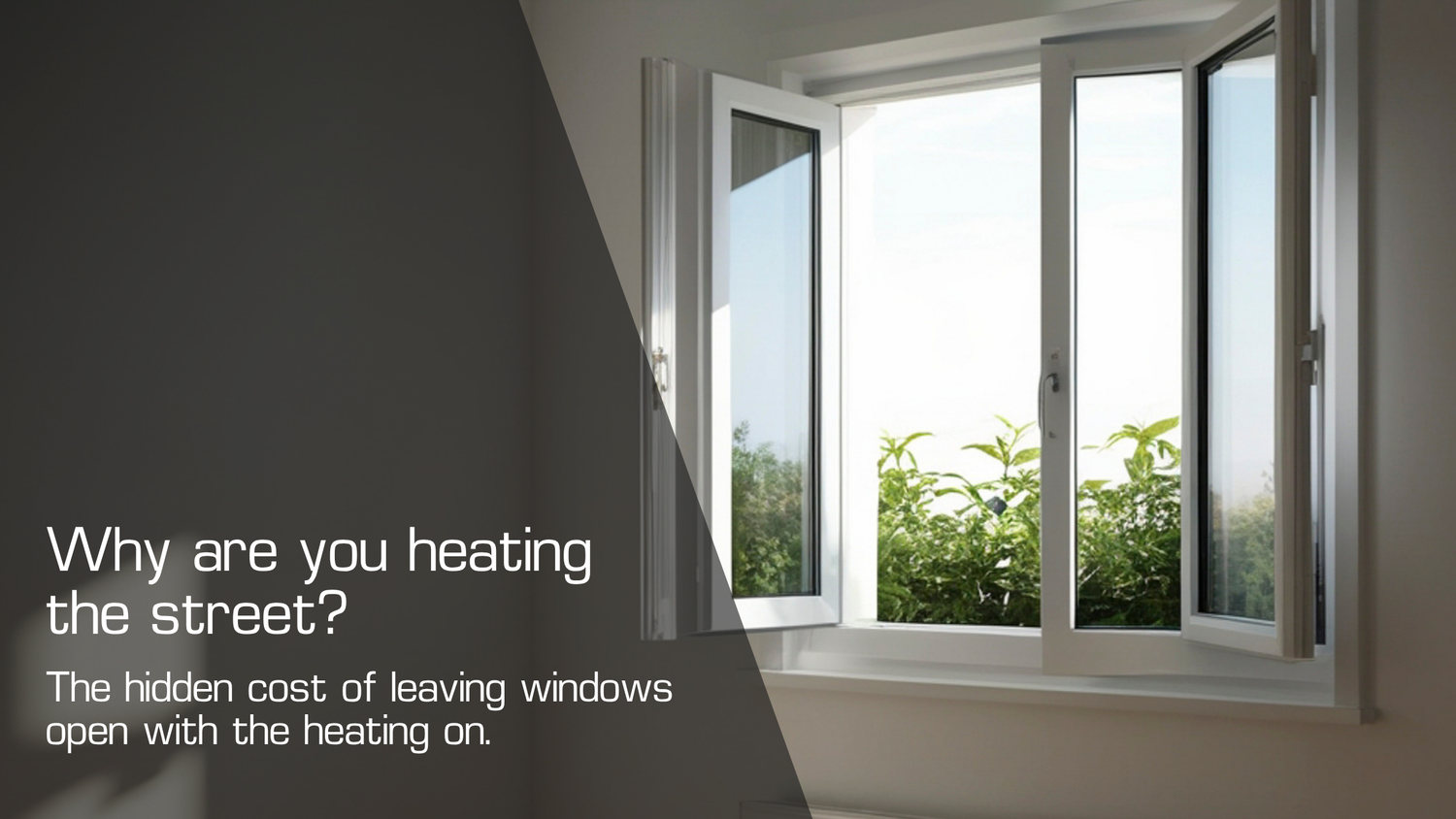
The hidden cost of leaving windows open with the heating on
As temperatures start to rise, many homes and rental properties run into the same problem.
The heating is still on… but so are the open windows.
It could be tenants trying to cool a room down, unpredictable spring weather, or simply forgetting to turn the heating off; it’s surprisingly common for heating systems to keep running unnecessarily during warmer months.
The result? Wasted energy, higher bills, and a heating system working much harder than it needs to.
A common problem in rental properties
For landlords, this can be especially frustrating.
A tenant gets too warm, opens a window, and leaves the heating running for hours at a time. It’s not usually intentional, it’s just habit. But over time, the wasted energy adds up.
And during those in-between seasons like spring and early summer, properties can swing from chilly mornings to warm afternoons very quickly.
Without proper heating controls in place, it’s easy for energy to be wasted daily.
Why timing matters
One of the simplest ways to reduce unnecessary heating usage is by limiting how long the heating stays on.
That’s exactly where TIME:O:STAT helps.
Rather than allowing heating systems to run continuously, TIME:O:STAT automatically turns the heating off after two hours. This prevents heating from being accidentally left running all day while windows are open or properties are empty.
It’s a simple feature, but one that can make a significant difference to energy usage and heating costs.
Smarter heating without the hassle
The reality is that most people don’t constantly think about their heating controls. They switch it on, get distracted, leave the house, or open a window when the room becomes too warm.
TIME:O:STAT is designed around real-life behaviour.
Instead of relying on people to always remember to turn the heating off, it provides a built-in safeguard that helps reduce waste automatically.
For landlords, this means:
- Lower energy waste
- Better heating control
- Reduced unnecessary usage
- Greater peace of mind between tenants
And for tenants, it still keeps homes comfortable without needing constant adjustments.
With TIME:O:STAT, heating works when it’s needed… and switches off when it’s not.


Leave a comment
This site is protected by hCaptcha and the hCaptcha Privacy Policy and Terms of Service apply.